What it is
- PET = a high-resolution imaging technique
- Rubidium-82 = a tracer that behaves like potassium and is quickly taken up by heart muscle cells

Orange County Heart Institute

A cardiac PET (rubidium) scan is an advanced version of a myocardial perfusion test. It gives very detailed, accurate images of how blood is flowing through your heart—often more precise than traditional nuclear stress tests.
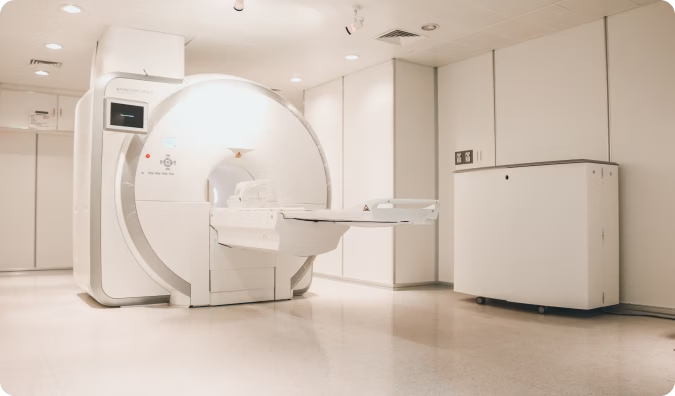
Because rubidium moves through the body very quickly, the test is usually faster than other imaging methods.
Doctors use it to:
One big advantage: it can quantify blood flow, not just show images—meaning it can measure how well blood is actually moving through the heart.
Compared to standard myocardial perfusion imaging:
Side effects are rare; stress medications may cause temporary symptoms like flushing or chest tightness
A rubidium cardiac PET is like a high-definition, real-time map of blood flow in your heart, helping doctors see not just where blood goes, but how well it gets there.
A cardiac PET scan with rubidium-82 and a standard nuclear stress test (SPECT myocardial perfusion imaging) are very similar in purpose—they both evaluate blood flow to your heart—but they differ quite a bit in accuracy, speed, and detail.
Here’s a clear side-by-side comparison:
PET: more accurate overall, especially for:
Ready to take the next step? Contact our friendly team to schedule a consultation today.